Advisory
Why preparing for AI matters
Start with necessary pre-work in developing responsible AI strategy.
Governance
Clear accountability, decision rights, and oversight
Workforce capability
The knowledge and capacity people need to navigate AI responsibly and fairly
Operating conditions
The processes, resources, and safeguards needed to sustain responsible decisions
The result
Stronger decisions before AI is deployed—and greater capacity to respond when conditions change
Why Ethical AI Matters
1. AI is already inside your organization
Staff are using public AI tools, and vendors are adding AI to existing products. AI-supported decisions are entering daily work before leaders have established clear oversight.
3. The people affected cannot opt out
AI increasingly influences access to care, housing, employment, benefits, and essential services. Those affected often have limited power to understand, challenge, or correct an AI-supported decision.
5. Good intentions are not enough
AI can reflect unequal access, over-surveillance, underinvestment, and institutional exclusion. A strong mission does not guarantee fair or equitable outcomes.
2. The pressure to automate is real
Limited staff, funding, and time make promises of efficiency highly attractive. But savings in one area can create new risks, dependencies, and hidden work elsewhere.
4. Efficiency can shift harm
Frontline staff may absorb additional verification, correction, and emotional labor while the people they serve face new barriers, delays, or weaker avenues for appeal.
6. Trust is hard to rebuild
When AI contributes to harm, it can deepen distrust among communities already experiencing inequity and weaken the relationships mission-driven organizations depend on.
Visual Handouts
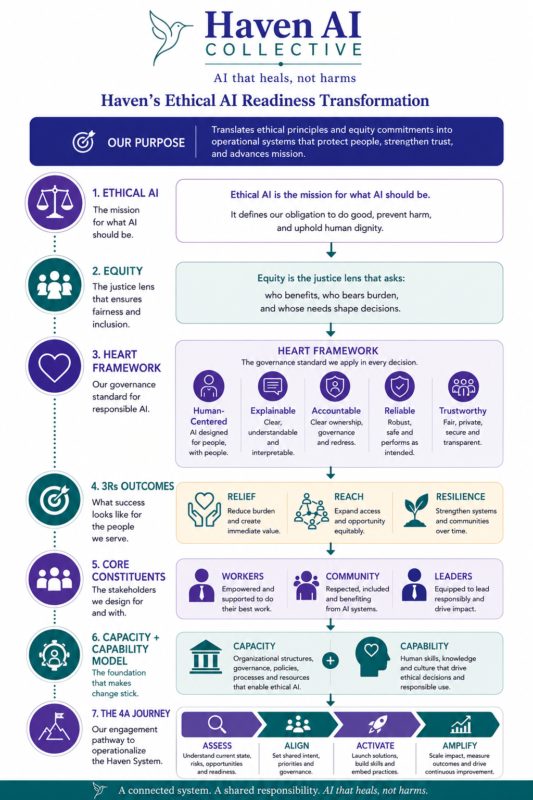
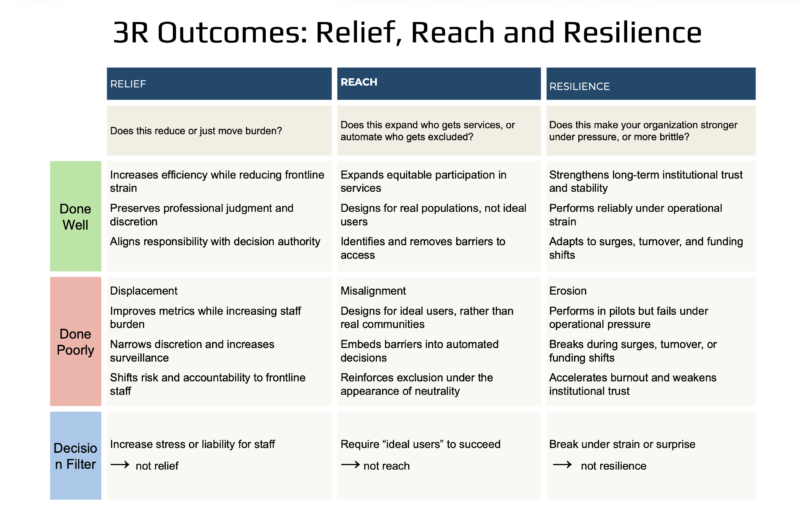
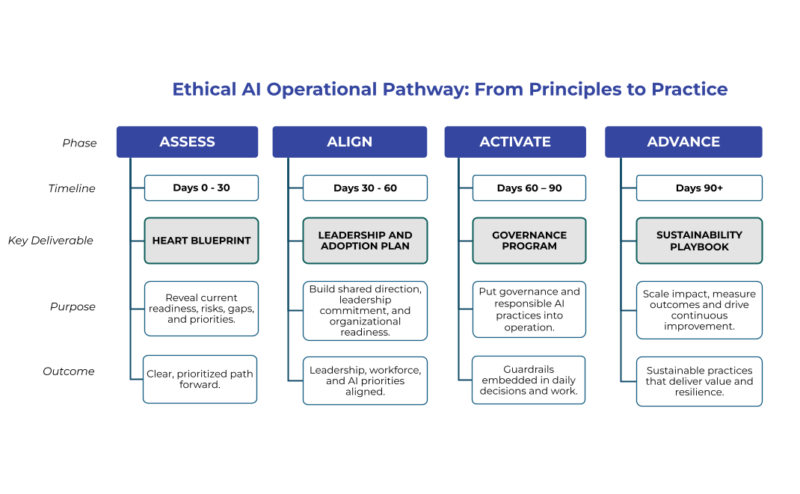
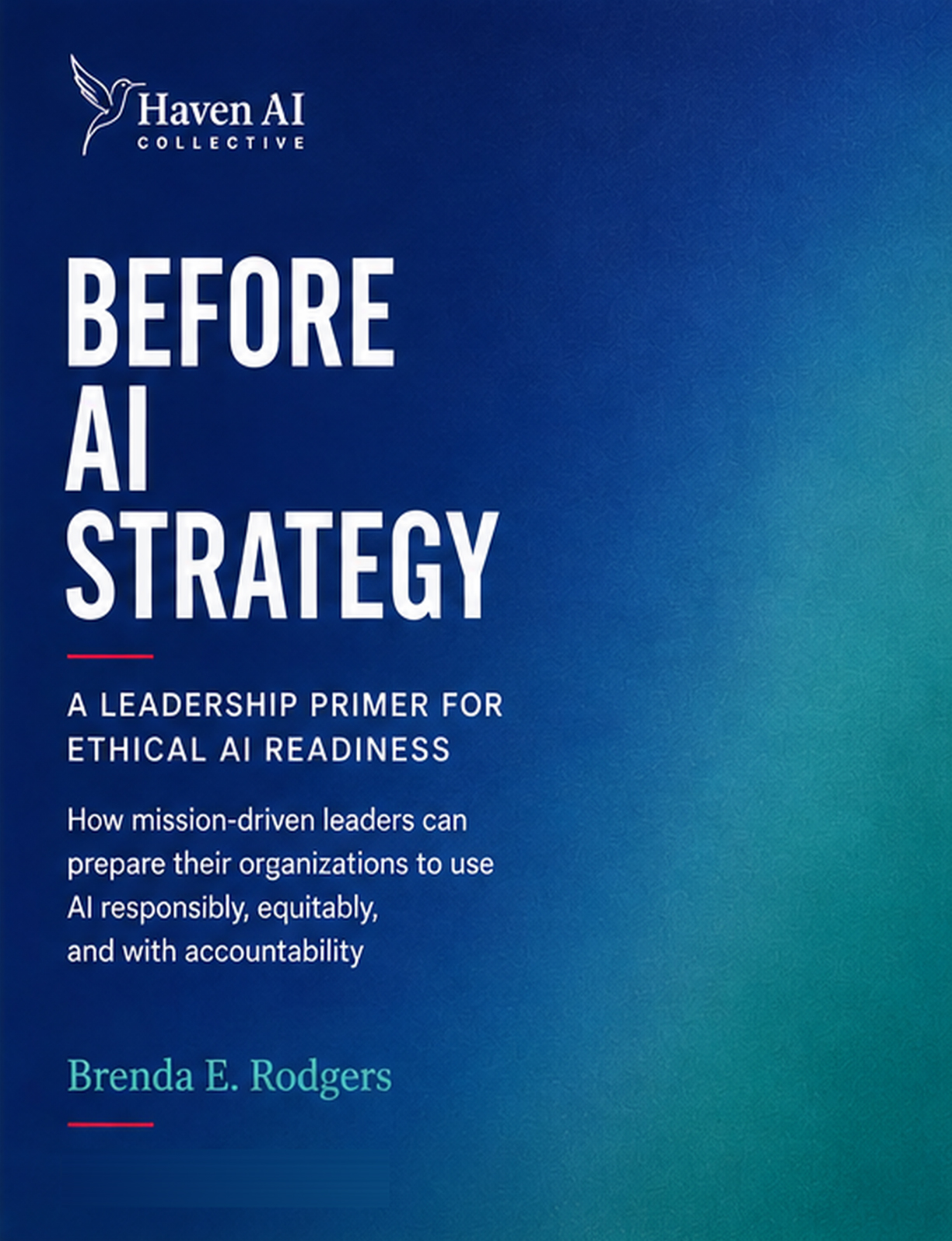
Our free guide to ethical AI readiness
Before AI Strategy
A Leadership Primer for Ethical AI Readiness